
Where Creativity, Science and Technology Connect
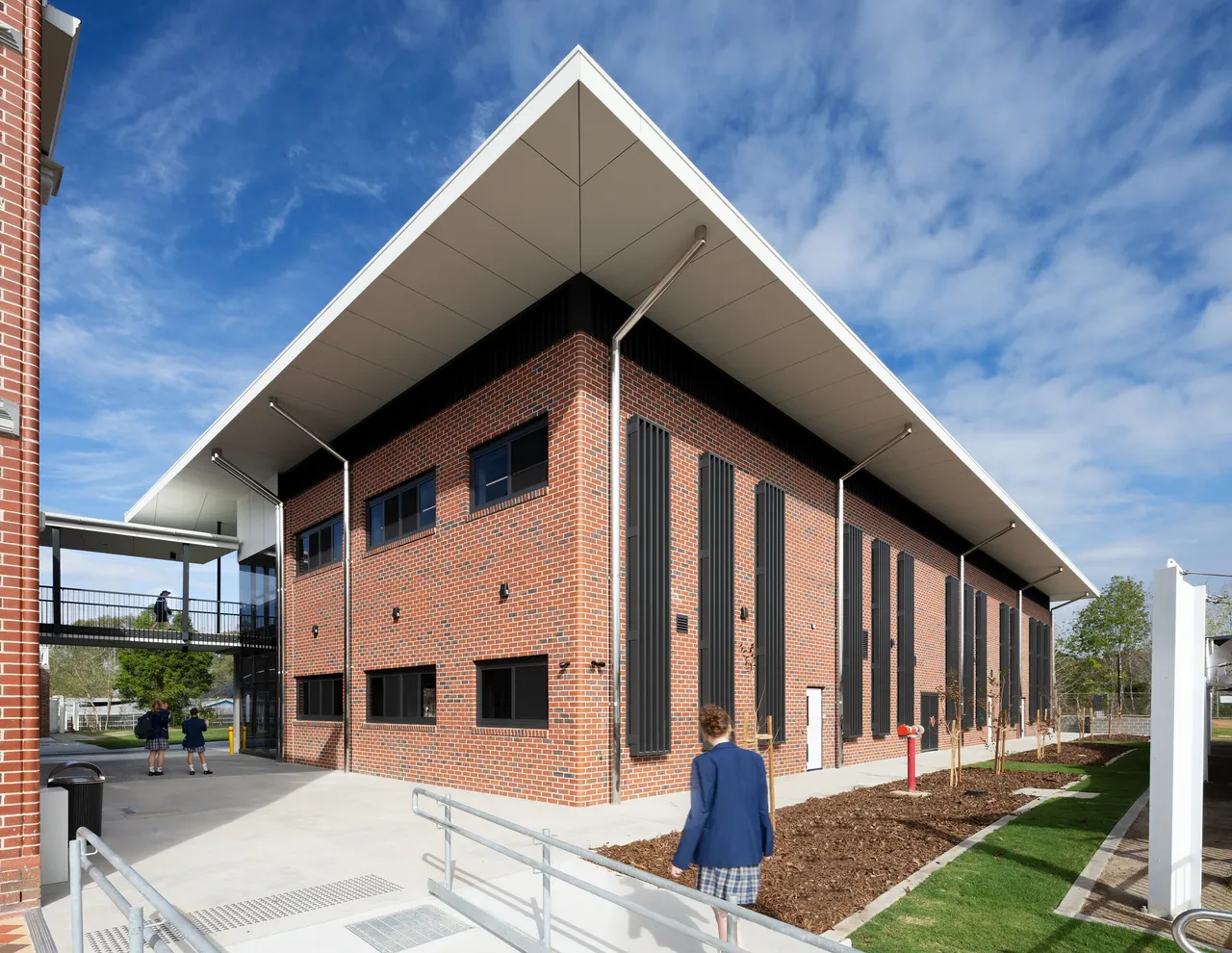
The new STEAM Building is proving to be an exciting addition to our campus, bringing Science, Technology, Engineering, Arts and Mathematics together in a purpose-built learning environment designed for exploration, creativity and collaboration.
Since opening, the building has provided students across Primary and Secondary with access to contemporary facilities and specialist technology, while creating new opportunities for teachers and students to work across traditional subject boundaries.
On the ground floor, the Media Lab supports digital learning, robotics and creative production. A suite of desktop computers is equipped with robotics, video and sound editing software, alongside a 3D printer and access to quality cameras, tripods, iPads and robotics components. A separate Production Studio provides high-end video editing facilities as well as specialist equipment for stop-motion filmmaking.
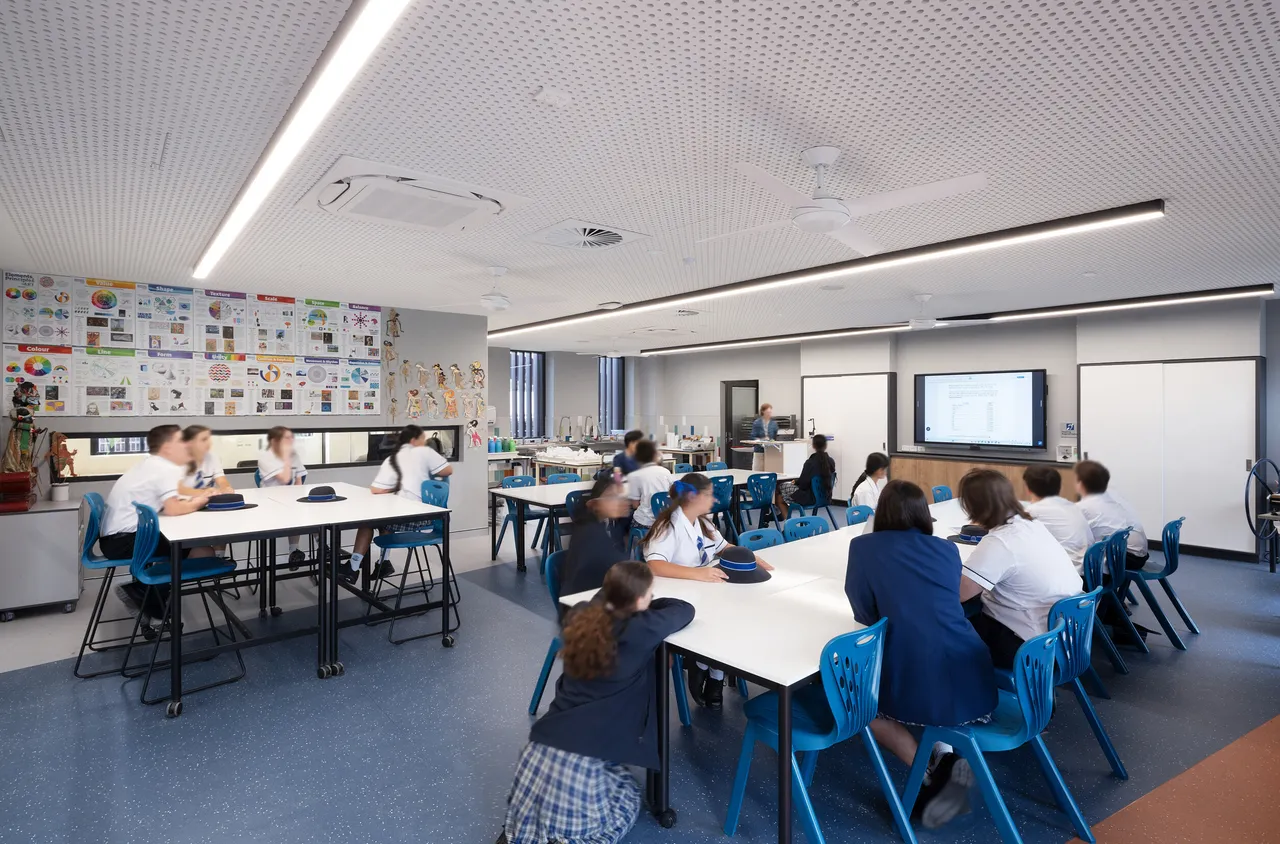
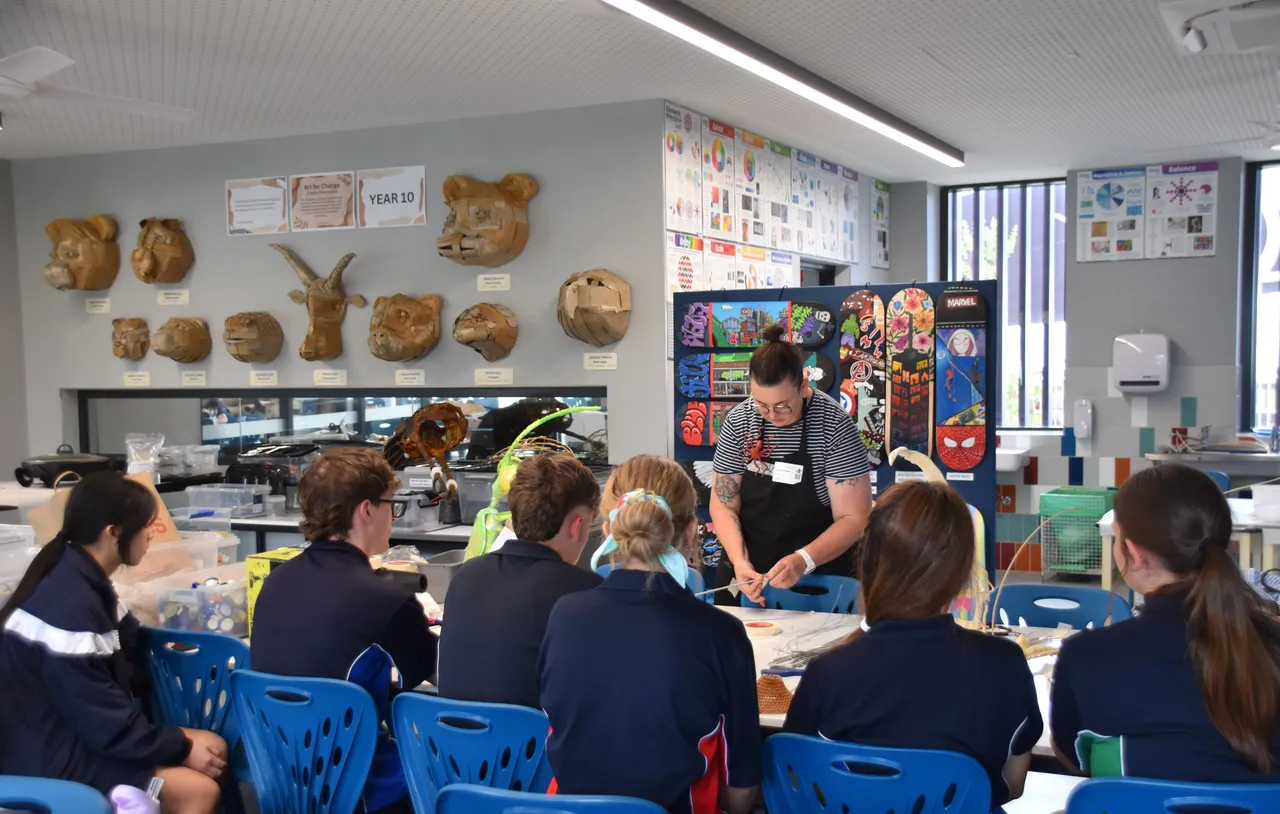
The ground floor is also home to dedicated Primary and Secondary Art Rooms. Both feature wet areas designed for painting and working with clay, with students sharing a specialist Kiln Room where ceramic works can be fired. The Secondary Art Room also includes dedicated photography booths, allowing students to professionally photograph their artworks or experiment with stop-motion filmmaking.
Large glass sliding doors connect all three ground-floor learning spaces with shaded outdoor seating and working areas. This flexible design allows classes to move easily between indoor and outdoor learning, making the most of the fresh air, natural surroundings and Queensland climate.
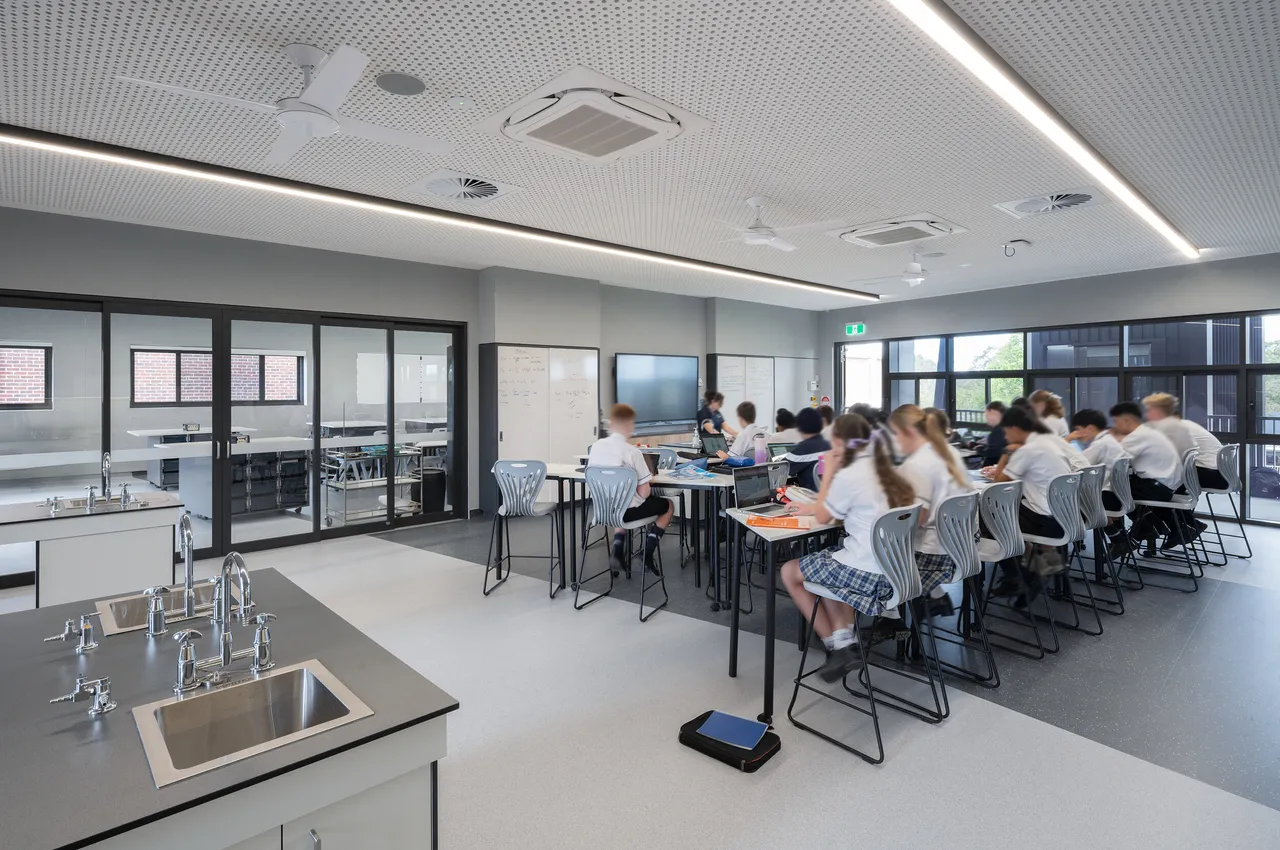
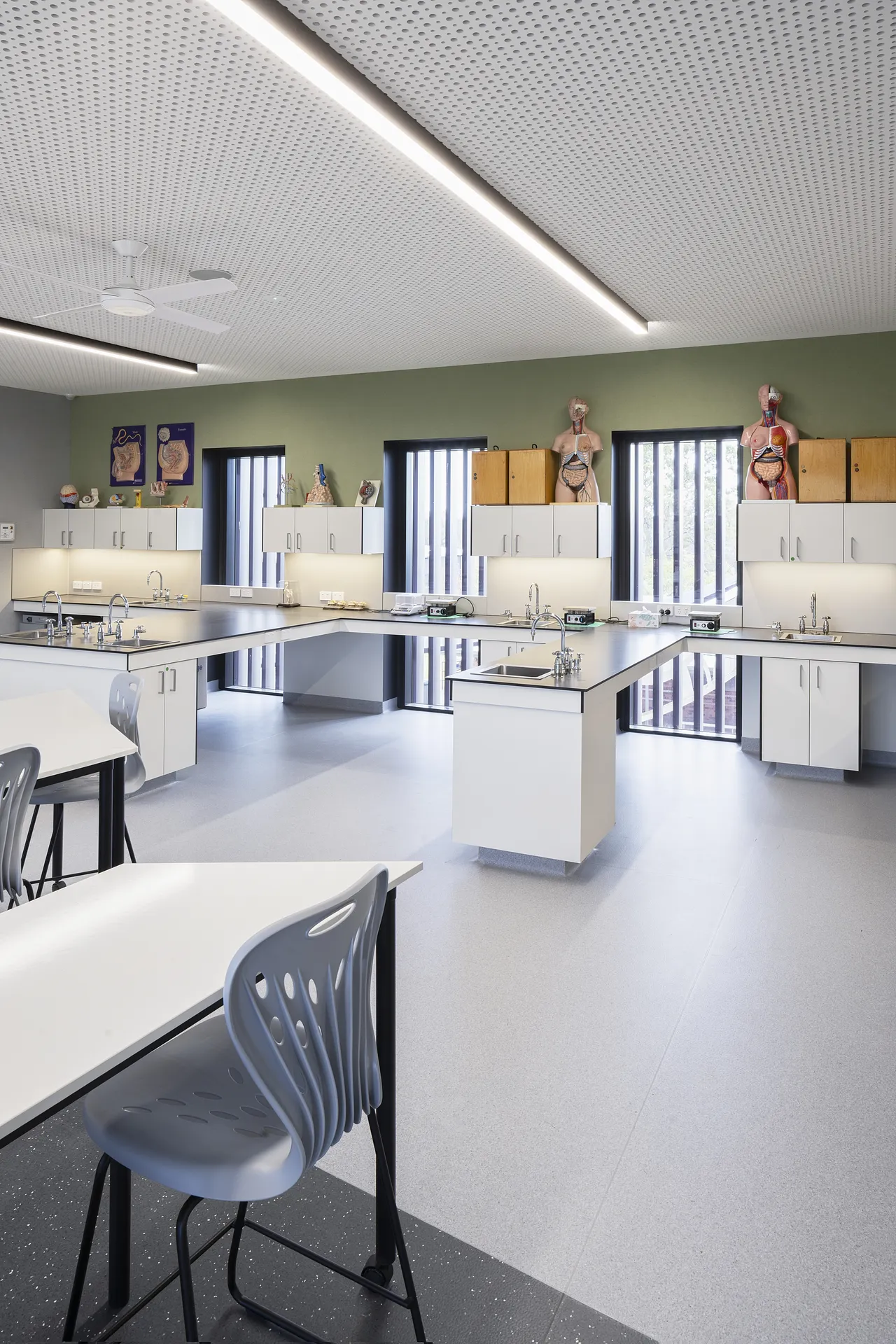
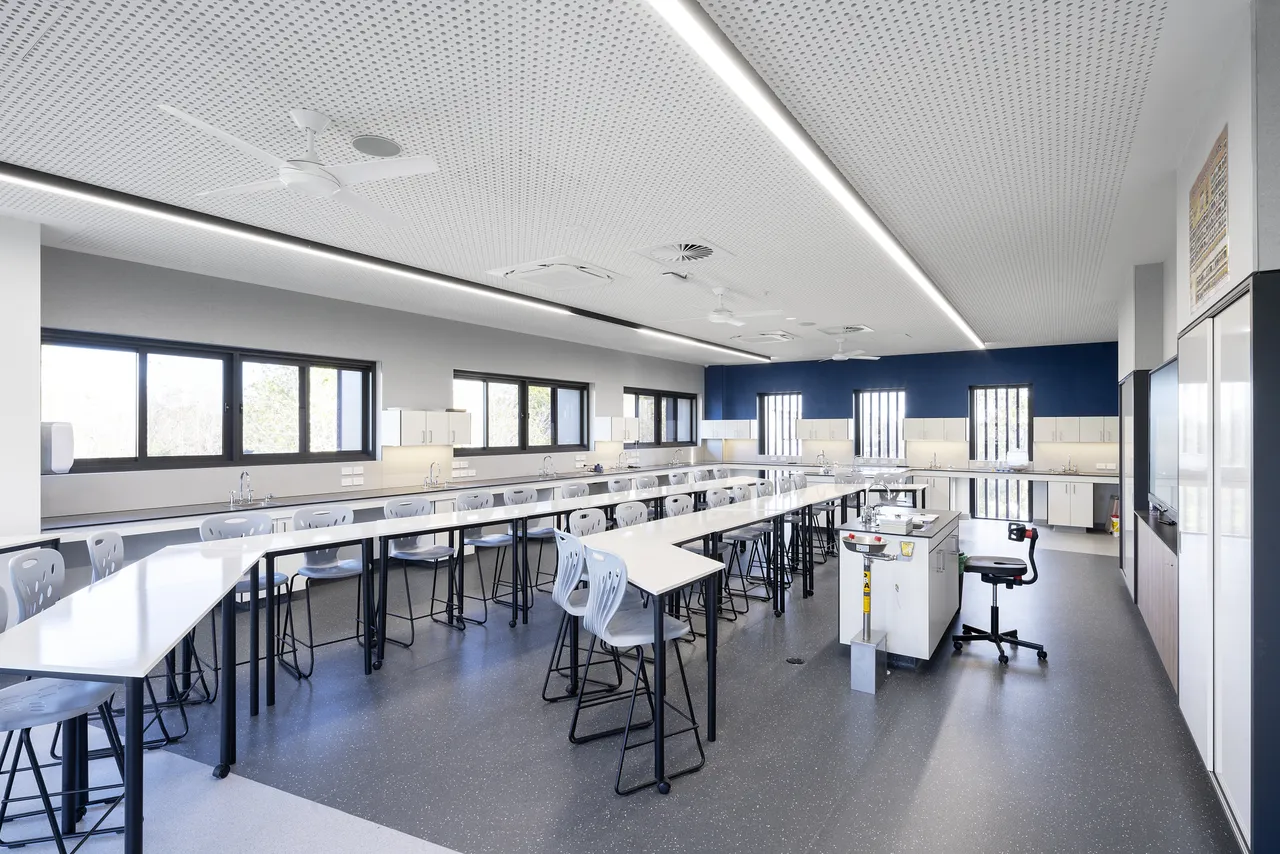
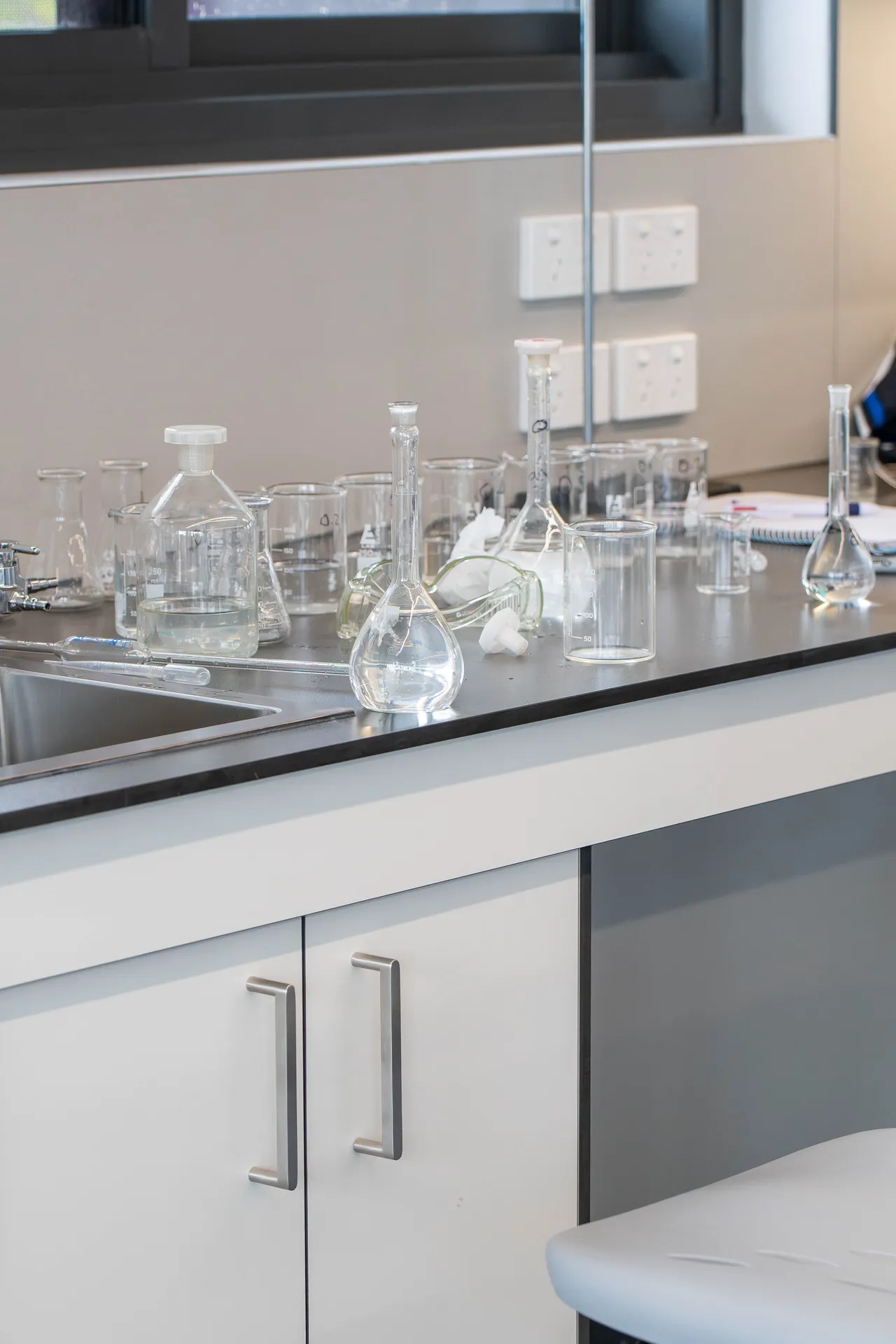
Upstairs, students have access to a dedicated Physics Room, General Science Room, Biology Lab and Chemistry Lab. The Chemistry Lab includes a specialist fume cupboard that enables a greater range of practical chemistry experiments to be performed safely.
Technology is integrated throughout the building, with every learning space featuring a BenQ interactive smart screen. Even the Chemistry Lab cabinetry has been designed as part of the learning environment, with whiteboard cupboard doors giving students space to write chemical equations, formulas and calculations as they work through practical activities and assessments.
Carpet-style wall tiles throughout the learning spaces allow artworks, posters and project work to be easily displayed using Velcro, transforming the walls into flexible gallery and exhibition spaces. As students create, investigate and experiment, their work becomes part of the environment around them, providing opportunities to showcase achievements, share ideas and inspire others.
Perhaps one of the most exciting outcomes, however, is not a particular room or piece of technology, but the collaboration the building is encouraging.
Bringing Science, Technology and the Arts together in one shared environment has created greater opportunities for teachers to exchange ideas and develop learning experiences across disciplines. Art projects are increasingly incorporating scientific concepts, while technology, media production and creative thinking can be embedded naturally across different areas of learning.
For students, this means more opportunities to investigate, design, create, experiment and make connections between subjects.
The success of the new STEAM Building reflects Hills College's commitment to providing contemporary learning environments that encourage curiosity, creativity and purposeful learning, helping students develop the skills and confidence they need for the future.
The STEAM Building project has been made possible due to funding from the State Capital Assistance Scheme (SCAS).
Primary and Secondary Schools | Hills Language College | International Baccalaureate World School